From what I’ve seen in real production environments, batch ovens are still widely used—and for good reason. They solve problems that continuous ovens simply cannot handle efficiently.
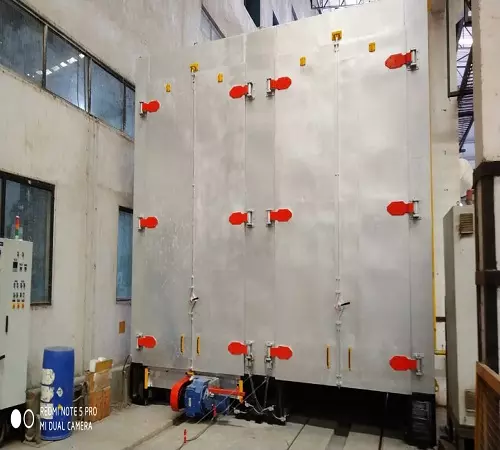
Why Batch Ovens Still Matter in Modern Production
A lot of people assume continuous systems are always better because they offer high throughput. That’s true for large-scale, repetitive production. But what actually happens in many factories is different.
Production requirements change. Product sizes vary. Sometimes you process one type of component today and a completely different one tomorrow.
In real production, that flexibility becomes more valuable than speed.
Batch ovens allow operators to load a set of parts, run a specific thermal cycle, and then adjust parameters for the next batch. This level of control is difficult to achieve in continuous systems.
What Are the Benefits of Using Batch Ovens in Production?
The biggest advantage is control over the process. When you close the oven door and start the cycle, you create a contained environment where temperature, airflow, and time stay consistent for that specific batch.
What actually happens is that every part inside the chamber experiences the same thermal conditions—assuming the loading is done correctly.
This consistency improves product quality, especially in processes like curing, drying, or heat treatment.
Flexibility That Fits Real Manufacturing Needs
In real production, no two jobs are always the same. One day you handle small components, and the next day you deal with large fabricated parts.
Batch ovens handle this variation without requiring major changes to the system.
One common issue I’ve seen with continuous ovens is that they struggle with irregular shapes or oversized parts. Batch ovens, especially walk-in or truck-in designs, easily accommodate these variations.
You can adjust temperature, cycle time, and airflow depending on the product. That kind of flexibility makes batch ovens a practical choice for job shops and medium-scale production units.
Better Control Over Temperature and Process Conditions
Temperature control plays a major role in thermal processing. If the temperature fluctuates too much, the final product quality suffers.
Batch ovens provide stable and controlled heating because they operate in a closed chamber. Once the cycle begins, external conditions have minimal impact.
From experience, this becomes especially important in processes like powder coating or curing. Even small temperature variations can affect surface finish and adhesion.
What I’ve noticed is that operators feel more confident when they can monitor and control each batch individually.
Uniform Heating When Done Right
People often assume that batch ovens lead to uneven heating. In reality, a properly designed system delivers very uniform results.
Forced air circulation ensures that hot air moves evenly throughout the chamber. This reduces the risk of hot spots and cold zones.
However, one common issue I’ve seen is improper loading. When parts block airflow, some areas receive less heat.
So the oven design matters, but so does how operators load the parts. When both are done correctly, batch ovens provide consistent heating across the entire load.
Cost Advantage in Many Production Scenarios
Not every factory runs at full capacity all the time. This is where batch ovens become more economical.
They require lower initial investment compared to continuous systems. Maintenance is also simpler because the system has fewer moving parts.
In real production, this matters a lot for small and medium-scale operations.
Another thing I’ve observed is energy usage. Batch ovens can be turned on only when needed. Continuous systems, on the other hand, often run for long hours even during low production periods.
That flexibility helps reduce operating costs over time.
Ideal for Large and Heavy Components
Some components simply cannot move through a conveyor system. Large fabrications, heavy machinery parts, or bulky assemblies need a different approach.
Batch ovens handle these applications easily.
I’ve seen walk-in ovens used for drying large electrical components and curing heavy metal structures. In such cases, trying to use a continuous system would create unnecessary complications.
Batch ovens allow you to bring the product into the oven instead of forcing the process to adapt to a conveyor setup.
Controlled Environment for Sensitive Applications
Certain processes require isolation from external conditions. This includes applications like clean-room operations or processes involving controlled atmospheres.
Batch ovens operate as closed systems. Once the door is shut, the environment inside remains stable.
This makes them suitable for applications where contamination must be avoided or where specific atmospheric conditions are required.
From practical experience, this controlled environment improves both process reliability and product quality.
Where Batch Ovens Are Commonly Used
Batch ovens appear in a wide range of industries because of their versatility.
In coating operations, they cure paints and powders on metal parts. In heat treatment, they handle processes like annealing or stress relieving.
In electronics, they remove moisture before assembly. In pharmaceuticals, they dry materials under controlled conditions.
What I’ve noticed is that once a facility starts using batch ovens effectively, they often expand their use across multiple processes.
Challenges You Should Be Aware Of
Batch ovens are not perfect, and it’s better to understand their limitations upfront.
One of the main challenges is processing time. Since the system works in batches, production may take longer compared to continuous setups.
Heat loss is another factor. Every time the door opens, some heat escapes, and the oven needs time to recover.
Manual loading and unloading also require attention. If parts are not placed correctly, it affects airflow and heating uniformity.
But in real production, these challenges are manageable with proper planning and operator training.
How JR Furnace Designs Batch Ovens for Real Production
From what I’ve observed, the difference between an average oven and a reliable one comes down to design decisions.
JR Furnace focuses on practical performance rather than just specifications. The airflow design ensures proper heat distribution, and the temperature control systems maintain stability throughout the cycle.
The designs also consider ease of operation. In real production, simple and reliable systems always perform better than overly complex ones.
This approach helps operators achieve consistent results without constant adjustments.
Why Many Manufacturers Still Prefer Batch Ovens
Even with advanced automation available today, batch ovens continue to play a strong role in manufacturing.
They offer flexibility, control, and cost efficiency—all of which matter in real-world operations.
When production involves variation, customization, or large components, batch ovens often become the most practical solution.
Understanding what are the benefits of using batch ovens in production helps manufacturers choose the right system for their needs and avoid unnecessary complications later.